Magnetic stirrers are widely used in laboratories and pilot-scale facilities for mixing liquids and suspensions.
Today, most laboratory stirrers are hotplate stirrers that combine both heating and stirring functions.
For general laboratory applications, this is the standard and most practical solution.
However, there are also environments where electrical heating — or even electricity itself — may become undesirable.
This is where air-driven magnetic stirrers continue to offer unique value.
Why Are Hotplate Stirrers the Standard?
In chemical and pharmaceutical laboratories, heating and stirring are often required at the same time.
Typical applications include:
- Dissolving materials
- Accelerating reactions
- Viscosity evaluation
- Crystallization studies
- Dispersion and suspension mixing
Because of this, electrically driven hotplate stirrers dominate the global laboratory market.
Situations Where Electric Stirrers May Not Be Ideal
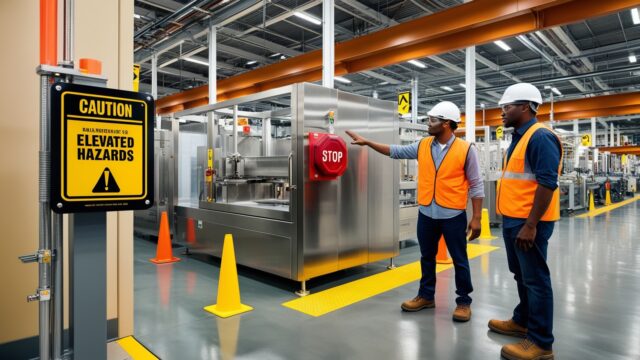
Certain environments require additional safety considerations, such as:
- Flammable solvents
- Inert gas atmospheres
- Enclosed vessels
- Glove box operation
- Hazardous areas
- Pilot-scale testing
In these situations, users may prefer to reduce electrical components near the process area.
Why Air-Driven Magnetic Stirring Still Matters
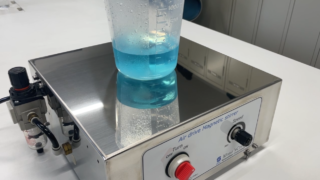
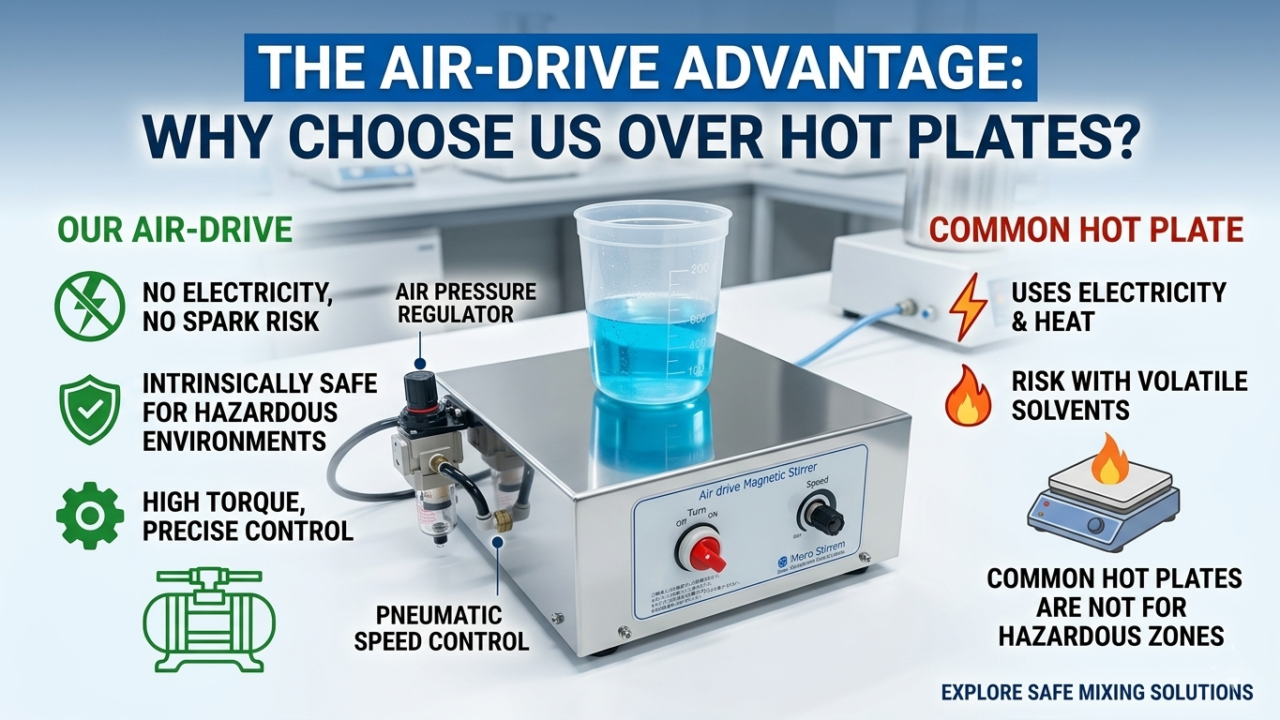
An air-driven magnetic stirrer uses compressed air instead of an electrical drive motor.
This approach may offer advantages such as:
- No electrical drive near the stirring point
- Reduced concern about sparks
- Compact structure for small-batch operation
- Easier integration into enclosed systems
- Suitable for temporary or portable setups
Rather than replacing conventional hotplate stirrers, pneumatic magnetic stirrers are mainly used for specialized environments where electrical systems are less desirable.
Typical Applications
Air-driven magnetic stirrers are often considered for:
- Solvent handling
- Chemical laboratories
- Pharmaceutical R&D
- Battery material development
- Inert gas operation
- Small enclosed reactors
- Hazardous material testing
Conclusion
Air-driven magnetic stirrers are specialized tools for applications where conventional electrically driven stirrers may not be the ideal choice.
While the overall market remains niche, pneumatic stirring systems can still provide practical advantages in environments involving:
- Flammable solvents
- Enclosed vessels
- Inert atmospheres
- Small pilot-scale processes
- Hazardous environments
In these situations, eliminating the electrical drive itself can become a meaningful benefit.
Product page:https://seiwag-us.com/shaker-and-mixer/air-driven-magnetic-stirrer/