Introduction
Many people assume that selecting a powder feeder is simply a matter of choosing the required feed rate and hopper size.
However, powder feeding applications are rarely identical.
Even when two customers require the same feed rate, the optimal feeder configuration may be completely different depending on the material and the process.
This is why powder feeders often require customization.
The goal is not to make the feeder more complicated—it is to make it more suitable for the specific application.
Every Powder Behaves Differently
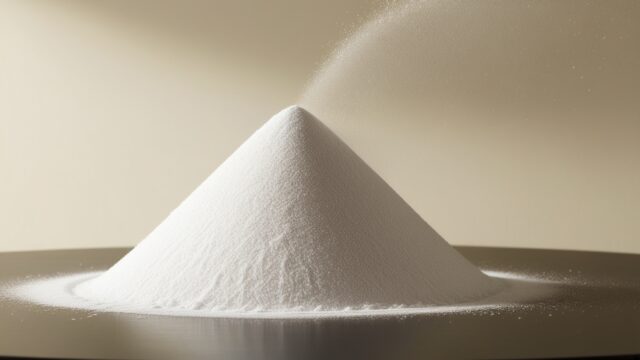
One of the biggest challenges in powder handling is that powders do not behave the same way.
Some materials flow freely, while others tend to:
- Bridge inside the hopper
- Stick to metal surfaces
- Absorb moisture
- Form agglomerates
- Compact during storage
Because of these differences, a standard feeder may perform well in one application but struggle in another.
Understanding the characteristics of the powder is often the first step in selecting the right feeder configuration.
The Process Environment Also Matters
The feeder itself is only one part of the overall system.
The surrounding process can significantly influence the required design.
For example:
- Will the feeder be connected to a reactor?
- Is the system sealed?
- Is the powder sensitive to oxygen or moisture?
- Does the process operate under pressure?
- Will the feeder be integrated into an automated production line?
Each of these conditions may require additional features that are not included in a standard model.
Common Customizations and Their Purpose
Different applications require different solutions.Some commonly requested modifications include:
Air or Nitrogen Purge
Some powders absorb moisture or react with oxygen.
Adding a purge port helps maintain a stable atmosphere inside the hopper and can improve powder handling for sensitive materials.
KF Flange Connections
Laboratory equipment and research systems often require standardized flange connections.
KF flanges make it easier to integrate the feeder into glove boxes, reactors, and other closed systems.
Vibrators or Agitators
Poor-flowing powders may require additional assistance to maintain a consistent flow.
Depending on the material, either a vibrator or an agitator may help reduce bridging and improve feeding stability.
The best choice depends on the powder characteristics and process requirements.
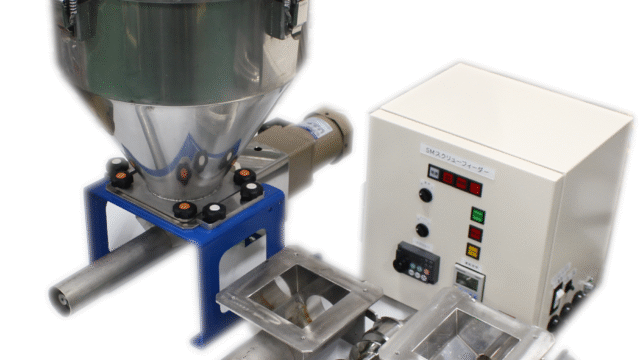
Shaftless Screws
For sticky or highly adhesive powders, material may gradually accumulate around the center shaft of a conventional screw.
A shaftless screw can reduce this buildup and improve long-term operation in certain applications.
External Control Signals
Many modern production lines require feeders to communicate with PLCs or other automation equipment.
External signal control allows the feeder to operate as part of an integrated system rather than as a standalone device.
There Is No Universal Configuration
One common misconception is that there is a single “best” powder feeder.
In reality, there is no universal solution.
A feeder designed for:
- Laboratory research
- Battery materials
- Food ingredients
- Chemical additives
- Pilot-scale production
may require completely different features, even if the target feed rate is similar.
The most suitable configuration depends on both the powder and the process.
Customization Is About Solving Problems
Customization should not be viewed as adding optional accessories.Instead, it is a practical way to solve application-specific challenges.
Whether the goal is:
- Preventing bridging
- Protecting moisture-sensitive powders
- Integrating with existing equipment
- Improving long-term feeding stability
- Supporting automated production
the right customization can make the difference between unstable and reliable powder feeding.
Conclusion
Choosing a powder feeder is about much more than selecting the correct capacity.The powder characteristics, operating environment, and production process all influence the final design.
Because every application is different, customization is often the most effective way to achieve stable and reliable powder feeding.
Rather than asking, “Which feeder is the best?”, a better question is:
“Which feeder configuration is best suited for this application?”
View our product
https://seiwag-us.com/screw-feeders/
Related Articles
- Why Do Powder Feeders Need Customization?
- Why Did My Powder Feeder Work During Testing but Fail in Production?
- Why Does a Screw Feeder Suddenly Stop After Hours of Operation?
- Why Does a Powder Feeder Stop Feeding Even When the Motor Is Running?
- Why Are Compact Feeders with Air Purging and KF Flanges Increasingly Requested?