Introduction
In powder handling applications, requests sometimes include a combination of requirements that may seem unusual at first glance:
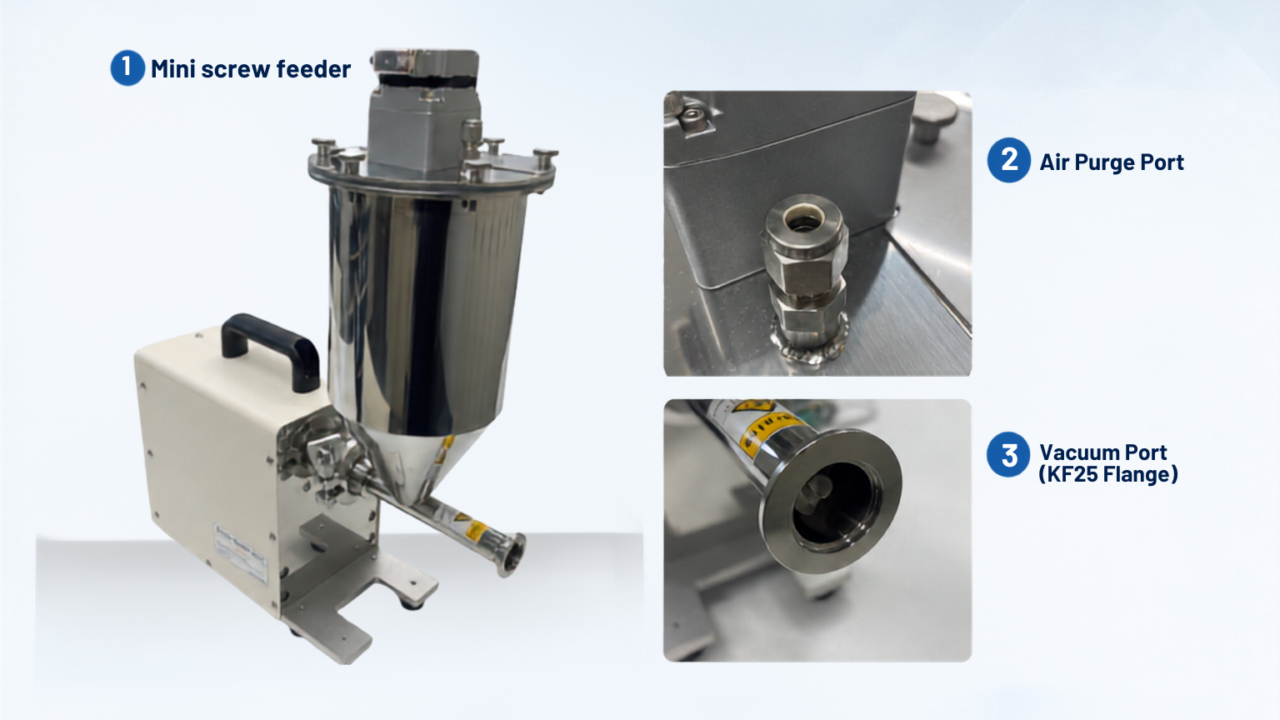
- Air or nitrogen purging
- KF flange connections
- Ultra-low feed rates such as 1 g/min
Why are these features needed at the same time?
In many cases, the answer is simple:
The application requires a small amount of oxygen-sensitive powder to be transferred into a closed system.
This is becoming increasingly common in research laboratories, pilot plants, and advanced material development.
Why Is Air Purging Required?
Some powders are highly sensitive to oxygen or moisture.
Examples include:
- Battery materials
- Metal powders
- Catalysts
- Specialty chemicals
When exposed to air, these materials may change their properties through oxidation or moisture absorption.
As a result, maintaining an inert atmosphere inside the feeder becomes important.
Air or nitrogen purging can help:
- Reduce oxygen exposure
- Minimize moisture absorption
- Maintain powder characteristics
- Improve process stability
Why Are KF Flanges Used?
KF flanges are commonly used in:
- Glove boxes
- Vacuum systems
- Small reactors
- Laboratory equipment
- Research and development facilities
Unlike large production plants, these systems often operate as closed environments.
The goal is to transfer powder without exposing it to the atmosphere.
For this reason, a feeder equipped with a KF flange can be integrated directly into an existing experimental setup.
Why Is Low Feed Rate So Difficult?
At first glance, feeding 1 g/min may seem easier than feeding 100 g/min.
In reality, the opposite is often true.
At low feed rates, even small changes in powder behavior can affect feeding accuracy.
Several factors become critical:
- Powder flowability
- Bulk density variations
- Screw filling efficiency
- Particle size and shape
- Cohesive behavior
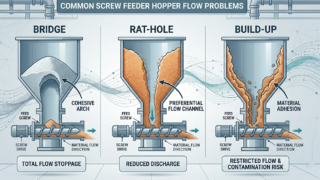
Some powders may bridge or fluctuate even when the feeder itself is operating normally.
For this reason, achieving stable low feed rates requires careful consideration of both the feeder and the material characteristics.
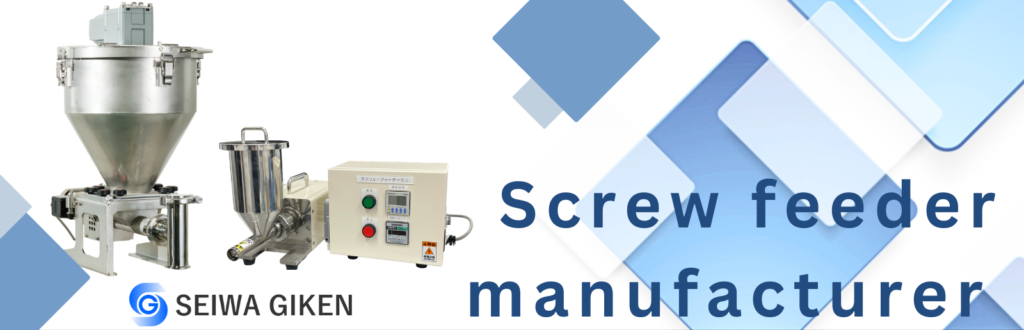
Commercial Feeders Are Often Too Large
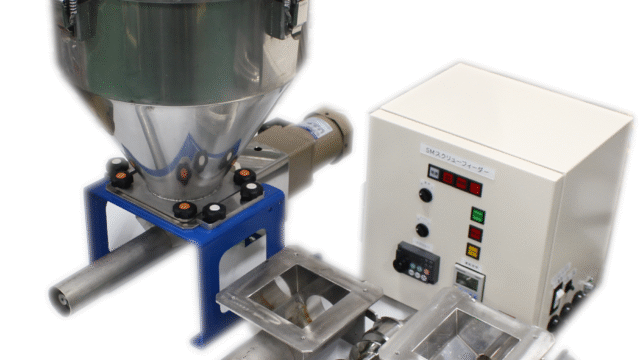
Another challenge is that many commercially available feeders are designed for production-scale applications.
Typical systems may offer:
- Large hopper capacities
- Feed rates of several kilograms per hour
- Standard flange configurations
- Open hopper designs
However, research and pilot applications often require something completely different:
- Compact size
- Closed construction
- Small hopper capacity
- KF flange connection
- Purge capability
- Ultra-low feed rates
As a result, standard equipment may not always meet the application requirements.
Finding a Practical Solution
When handling oxygen-sensitive powders, the objective is not simply to select the smallest feeder available.
The feeder must also match:
- The powder characteristics
- The process environment
- The required feed rate
- The connection method
- The atmosphere control requirements
In some cases, continuous feeding may be suitable.
In others, intermittent operation or additional customization may provide a more practical solution.
The most important step is understanding the application as a whole rather than focusing on a single specification.
Conclusion
The combination of air purging, KF flanges, and ultra-low feed rates may seem unusual.
However, these requirements are becoming increasingly common in applications involving:
- Research and development
- Battery materials
- Advanced materials
- Oxygen-sensitive powders
- Small-scale process systems
For these applications, compact feeders designed for closed systems can help maintain powder quality while providing stable and accurate feeding.
Selecting the right solution often begins with understanding why these requirements exist in the first place.
Related Articles
- Five Key Factors That Affect Screw Feeder Feeding Accuracy
- How Oxidation Affects Powder Feeding Performance
- How to Control a Powder Feeder Using External Signals