Introduction
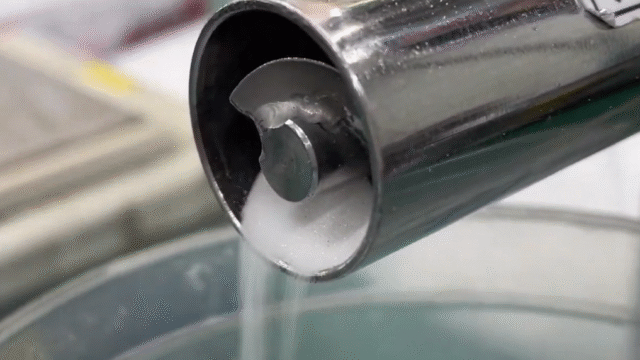
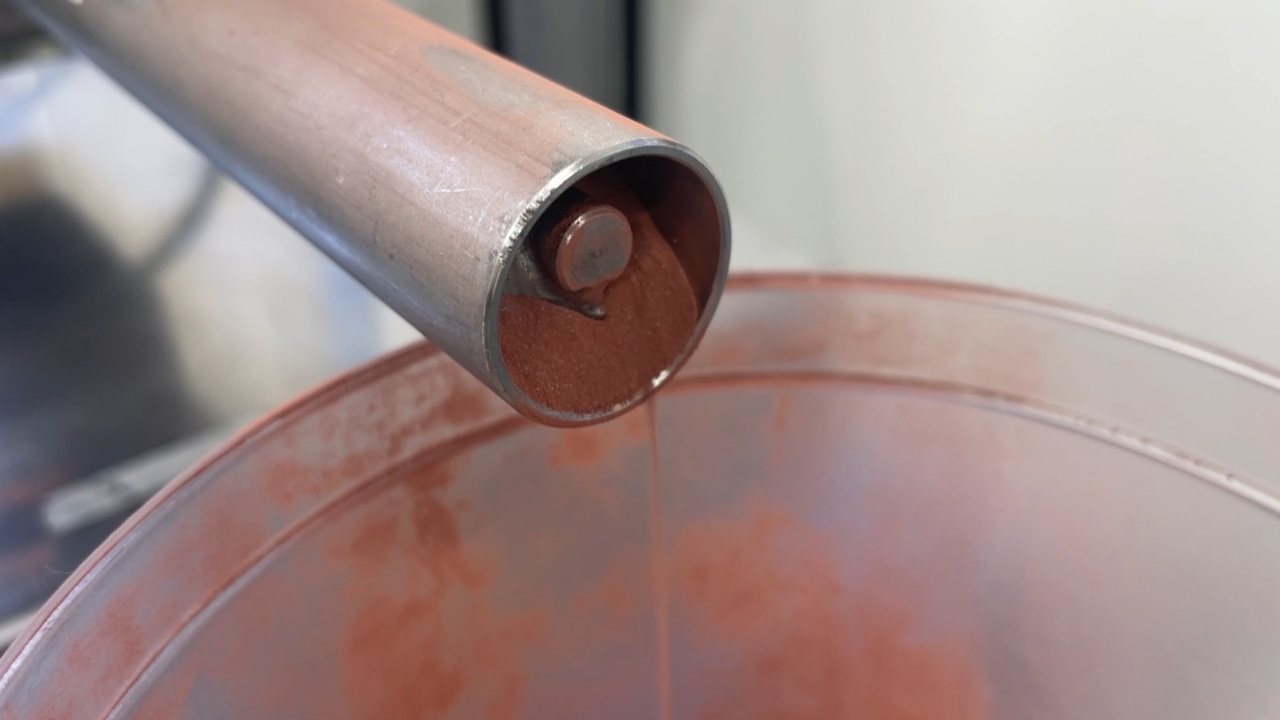
Many powder handling applications require extremely low feed rates.
Examples include:
- Battery materials
- Catalysts
- Additives
- Research and development processes
- Pilot-scale production
At first glance, feeding a small amount of powder may seem easier than feeding a large amount. However, in practice, ultra-low feed rates are often among the most challenging applications for a screw feeder.
This article explains why ultra-low powder feeding is difficult and why alternative approaches may sometimes provide better results.
What Is an Ultra-Low Feed Rate?
Consider a feed rate of 6g/h.
This may not sound particularly difficult until it is converted into smaller units.
6g/h equals:
- 0.1g/min
- 0.001g/sec
At this level, even minor changes in powder flow behavior can significantly affect feeding accuracy.
Factors that might be negligible at higher feed rates become critical when feeding only a few grams per hour.
Why Continuous Feeding Becomes Challenging
Many customers initially request continuous feeding.
While continuous operation is ideal in theory, maintaining a stable and repeatable flow at extremely low feed rates can be difficult.
Several factors contribute to this challenge:
Powder Flowability
Powders do not always behave consistently.
Changes in moisture content, particle shape, or bulk density can influence how material fills the screw.
Screw Filling Efficiency
At very low feed rates, the amount of powder captured by each screw rotation becomes extremely small.
Small variations in screw filling can result in noticeable changes in output.
Particle Characteristics
Fine powders, lightweight materials, and cohesive powders are often more difficult to feed consistently at ultra-low rates.
Continuous Feeding Is Not Always the Best Solution
When discussing low feed rate applications, it is important to focus on the process requirement rather than the feeding method itself.
In some cases, customers request continuous feeding because it appears to be the most straightforward solution.
However, if the target feed rate is extremely low, forcing continuous operation may actually reduce feeding stability.
The objective is usually not continuous screw rotation.
The objective is to achieve the required average feed rate accurately and reliably.
Intermittent Feeding Can Be a Practical Alternative
For some applications, intermittent operation can provide a more practical solution.
Instead of continuously rotating at an extremely low speed, the feeder operates periodically according to a defined cycle.
For example:
- Feeding for a short period every minute
- Feeding every few minutes
- Operating according to an external control signal
By adjusting the operating cycle, it is often possible to achieve the required average feed rate while maintaining better feeding consistency.
In certain applications, intermittent feeding may provide more stable performance than attempting continuous operation at the absolute limit of the feeder’s capability.
The Importance of Application-Based Design
There is rarely a single solution for ultra-low powder feeding.
The optimal approach depends on several factors, including:
- Powder characteristics
- Required feed rate
- Process requirements
- Feeding duration
- Control system capabilities
For this reason, evaluating the application as a whole is often more important than focusing solely on a target feed rate specification.
Sometimes a small design adjustment or a different operating strategy can produce significantly better results.
Conclusion
Ultra-low powder feeding presents unique challenges that are often underestimated.
As feed rates decrease, factors such as powder flowability, screw filling efficiency, and material characteristics become increasingly important.
While continuous feeding may be suitable for some applications, intermittent operation can sometimes provide a more practical and stable solution.
When dealing with extremely low feed rates, understanding the process requirements and powder characteristics is often the first step toward finding the most effective feeding method.
Related Articles
- Five Key Factors That Affect Screw Feeder Feeding Accuracy
- How Oxidation Affects Powder Feeding Performance
- How to Control a Powder Feeder Using External Signals