In many powder handling applications, attention is often focused on feed rate accuracy.
However, feeding the correct quantity is not always enough.
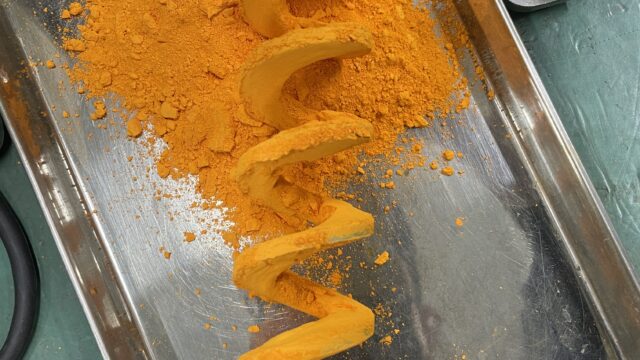
In some processes, large agglomerates or lumps can create problems for downstream equipment, even when the feeder is operating correctly.
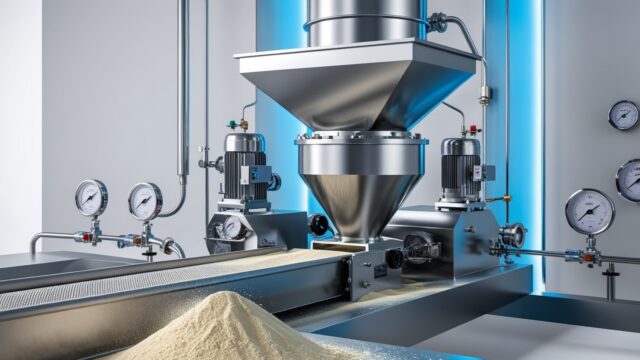
To address this issue, a mesh screen can be installed at the feeder discharge to help prevent oversized particles from entering the process.
Where Do Agglomerates Come From?
Even powders that are originally fine and free-flowing can develop agglomerates during handling and storage.
Common causes include:
- Moisture absorption
- Material compaction during transportation
- Long-term storage
- Natural powder cohesion
As a result, occasional lumps may be present even when the bulk material appears acceptable.
Why Are Agglomerates a Problem?
Large agglomerates can create several issues downstream.
Examples include:
- Inconsistent material quality
- Blockage of small openings or nozzles
- Process instability
- Reduced mixing performance
- Difficulties in dosing applications
In these situations, controlling particle condition can be just as important as controlling feed rate.
A Simple Solution: Mesh Screen at the Feeder Discharge
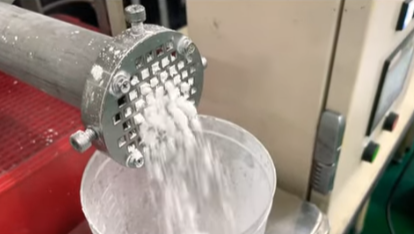
One practical approach is to install a mesh screen directly at the feeder discharge.
The screen allows normal powder to pass while preventing larger agglomerates from entering the next process step.
This simple modification can help:
- Prevent oversized agglomerates from passing downstream
- Improve material consistency
- Protect downstream equipment
- Reduce process interruptions
What Happens to the Agglomerates?
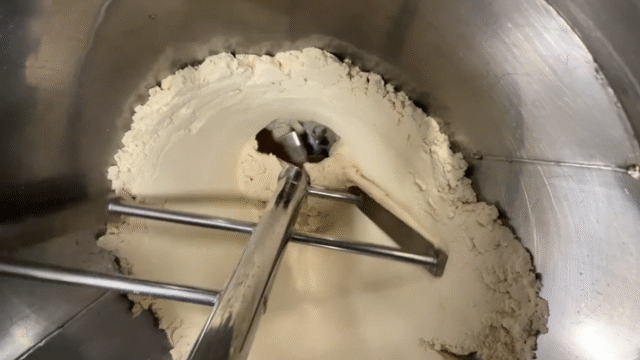
When large agglomerates reach the discharge area, they are retained by the mesh instead of being transferred to the next process.
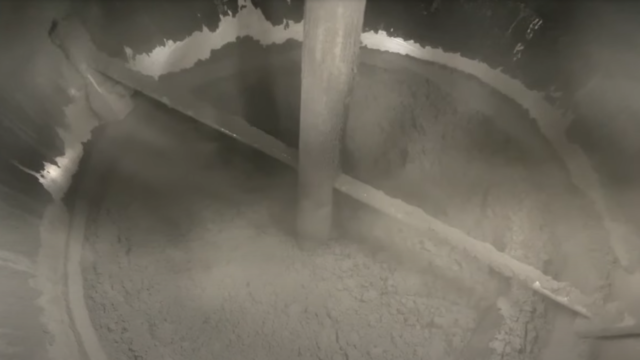
The video below demonstrates this concept.
In this example, fine powder passes through the screen while larger agglomerates remain on the mesh surface.
This allows operators to identify material quality issues before they affect downstream equipment.
Typical Applications
Discharge screening can be useful in applications involving:
- Fine chemicals
- Additives
- Pigments
- Recycled materials
- Powders prone to agglomeration
The appropriate mesh size depends on both the material characteristics and process requirements.
Conclusion
Stable powder feeding is not only about feed rate accuracy.
In some applications, preventing oversized agglomerates from entering the process is equally important.
A simple mesh screen installed at the feeder discharge can provide an effective way to improve material consistency and protect downstream equipment without requiring major changes to the feeding system.
Related Articles
- Five Key Factors That Affect Screw Feeder Feeding Accuracy
- How Oxidation Affects Powder Feeding Performance
- How to Control a Powder Feeder Using External Signals